Wednesday, April 10, 2013

Organic Hydroponics

papaya grown in soil with organic nutrients under T5 lighting

I want to defend organic nutrients, but not the word organic. We're learning not to trust the word "organic" the way we demoted the word "natural" to a synonym of "anything". As in: 'anything you can sell is natural.' Some of our nutrient brands have gone a step further to describe their products as "vegan" to emphasize that they are using non-mined plant sources like seaweed. It's important to understand that hydroponic systems for agriculture conserve more water, energy and mineral resources than open industrial farming by a long shot.

Phosphorus is the reason we have a problem labeling any fertilizer organic. Phosphorus is a scarce finite resource on planet earth. It is an essential element for life, and is extracted from phosphate rock almost entirely for agriculture use around the world. There are organic and synthetic processes of phosphate extraction in mineral mining.

When is the earth-destructive process of mineral extraction qualified as organic? This has to do with chemicals used in the chelation process of making absorbable phosphate fertilizers from rock. Synthetic chelates like EDTA or DTPA used to strip phosphates from rock appear in trace amounts in non-organic produce grown with synthetic fertilizers. Organic chelates are humic or fulvic acids derived from the natural decomposition of organic material. The phosphates recovered by humic acids are identical to those found in nature.

Optimistic scientists say we have more than 100 years before the end of agriculture (and strike-matches technology). Recycling phosphorus by using manure or animal bones as a source for phosphorus fertilizer on local farms is the approach used by permaculturists. Phosphorus conservation for urbanites and suburbanites can be achieved with hydroponics.

Many nutrients labelled 'organic' are made for soil, and include nutrients that promote living microflora. This is technically not hydroponics. Hydroponics, by definition, uses inert soilless mediums that allow easy nutrient exchange with the roots of plants. Soil is increasingly popular in urban gardening because of the benefits of microflora. Plants grown in soil are more resilient to everything. Beneficial microbial life in the soil create these organic chelates (humic acids) that continue to make phosphates and other minerals in soil available to plants for absorption.

Whether the system is hydroponic or soil, in full sunlight or beneath powerful grow-lights, the principles of plant nutrition are the same. If you can identify and abundantly provide the minerals plants need during different stages of growth, the plants will grow large and produce a lot of food. This works in soil as well with the use of organic nutrients.

There are nutrients designed specifically for growth, blooming, fruiting, and as targeted adjustments to mineral deficiencies in plants. There are enzyme catalysts , micro-flora cultures, and amendments for every imaginable application. Insect frass, for example, is insect material that is both a fertilizer, and a trigger for plants to produce their own natural pest-deterring immune response.

Hydroponics is water-efficient. Many systems recycle nutrients until the fertilizer is spent. Even nutrient wastewater from non-organic, or mineral-derived nutrients used in hydroponics is cleaner than grey water from laundry machines and dishwashers. If you live in an area with municipal water treatment, dumping your waste nutrients down the drain makes extra food for the microbes used in water reclamation. The city might notice a bump in organic activity (a proper use for the word organic) at their treatment facility. Some ethically-minded growers make their own ponds to reclaim nutrient wastewater.

Fertilizers that wind up in lakes and rivers produce algae blooms that can suffocate fish and destroy ecosystems. Even organic nutrients will feed algae blooms. This is a manageable problem for industry-scale hydroponics but not for high-input farming. High-input farming has no efficient way to recover, recycle or reclaim the chemical fertilizers and pesticides required to sustain those operations. Fertilizer run-off is devastating to ecosystems as seen here in Florida's toxic algae

If organic is a standard based on input (no chemical fertilizers, synthetic pesticides, etc.), is a tomato grown organically in California still organic in Washington? We can describe produce as 'local and organic', but 'organic' farming is as unsustainable as the farming industry ever was. Sustainable agriculture is local and resource-efficient. This is why we promote hydroponics. 

Sources not linked above:
http://en.wikipedia.org/wiki/Chelation
http://en.wikipedia.org/wiki/Edta
http://en.wikipedia.org/wiki/DTPA
http://ngm.nationalgeographic.com/2013/05/fertilized-world/charles-text

--> don't knock wiki sources. 

Monday, March 25, 2013

Do-It-Yourself Light Stand

Summertime in Arizona is always rough on our plants. Shade houses outside will extend the growing season into the hottest days of June and July, but our most long-lived plants will stay comfortable inside.

This stand cost less than $30 to make using lumber and wood screws from our local hardware store. We made this stand to conserve space in our 1300 SF house. We can fit three of these setups in the same area where two setups barely fit before on a commercial stand.
Three 600 Watt bulbs is the limit on a 20 Amp circuit.

The design is simple and uses minimal materials. Feel free to use and modify the design and share any improvements.

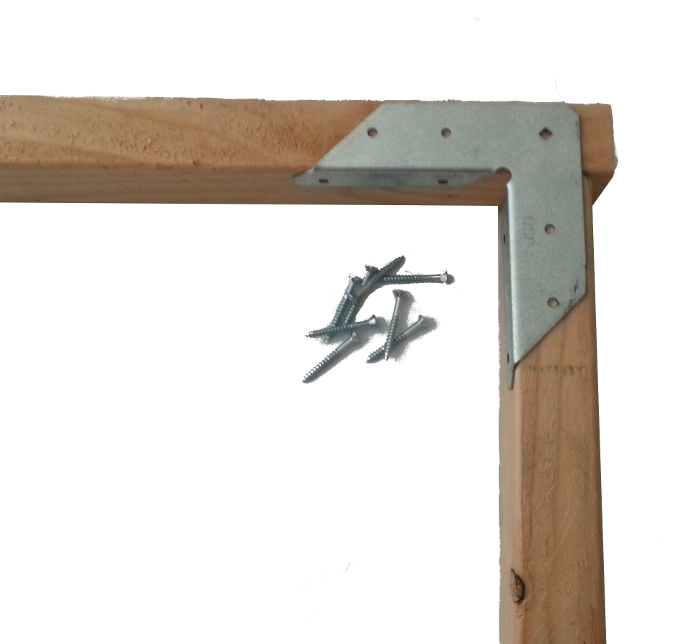
This design measures 42 inches between the tall posts and fits a 3x3 foot flood tray. You will need a saw (or you can get the boards cut before you bring them home), a drill and a 7/64" bit, 3.5" #8 wood screws and the following lumber:

2 4x4 posts @6.5 feet
2 4x4 posts @1.5 feet
4 2x4 boards @37 inches
1 2x4 board @52+ inches

First consider how the boards will come together. There may be knots in the wood that you will want to avoid.

On a flat surface, lay out one side of the stand with the 4x4 posts beneath and one 37" board to connect them. It helps to use the other 37" boards to position the posts apart and keep the frame square. Make sure the 2x4 side is flush with the top of the short 4x4 post. When the side is neat and square, drill holes for the screws. It helps to label each board and the post where you drilled. Do this for every side.

Once all of the holes are drilled, have someone help you assemble the frame. Make sure every screw is snug and flush with the surface of the wood.

Nails will work to secure the top rail to the posts, just remember not to lift the stand with the top rail or it will pop off. We used screws, but we still lift from the base of the stand.

We're using a flood tray in our setup. If we want to convert this stand to grow seedlings or plants in smaller potting containers we can just add boards to the base to make a platform.

I hope this is useful, but please be careful! We do not take any responsibility for the quality of your construction.

This stand will work great for the 400W Complete Coco Setup.

The hood in the picture is the Radiant 8" AC Reflector.

Special order light stands from our manufacturers.


Monday, March 18, 2013

Responsible Agriculture

The energy demand for growing fruits and vegetables hydroponically can be prohibitive, but before we label local urban agriculture impractical and unsustainable there are a few things we need to consider.  

The United States provides subsidies for oil and agriculture. If the produce at your grocery store is not directly subsidized by the government, the fuel required to get your produce to the store is. This makes it difficult to calculate the real cost-per-pound of produce at your local grocery store. What you save on your grocery bill comes out of your taxes.

Problems with American Agriculture About 20 cents from every dollar spent on produce at the grocery store reaches the farm. The other 80 cents represents the cost of labor, marketing and distribution.  


We’ve built an agriculture system in the United States that is high-input. The bulk of agricultural produce is grown on enormous farms where the same species is planted continuously for miles. These monocultures are susceptible to the same infections, diseases and pests. The only defense we have to a national food-supply catastrophe is maintained with industrial fertilizers, pesticides, and genetic manipulation. We’ve exported these technologies all over the world, where the cost of labor is low and environmental restrictions are lax, or non-existent. We import about 25 Million tons of produce (of fruits, vegetables, nuts) from farms overseas.


From the University of Michigan:

“Researchers have recently demonstrated that combinations of agricultural chemicals(pesticides and nitrate) are capable of altering immune, endocrine, and nervous system parameters in mice at concentrations of the same order of magnitude as current groundwater maximum concentration levels. These same researchers suggest that current testing protocols for pesticide approval are deficient in six identified testing arenas and do not adequately address the potential for biological effects under real world exposure scenarios (such as mixed and pulse dosages). They further raise the question of whether pesticides and/or other environmental chemicals might be associated with developmental concerns such as the surge in learning disabilities, attention deficit disorders, and orthopedic problems exhibited by children in the United States.” http://css.snre.umich.edu/css_doc/CSS00-04.pdf

Industrial Fertilizers The major source of industrial fertilizer is anhydrous ammonia: a chemical gas most abundantly derived from non-renewable fossil fuels, that is injected into soil, or used to derive water-soluble fertilizers that contaminate the water supply. Much of the nitrogen in industrial fertilizer escapes into the atmosphere before it is absorbed by plants, in the form of nitrous oxide: the third major contributor to greenhouse gasses.

“Effectively farmers unknowingly became 100% dependent on 'bought in' water soluble, inorganic fertilizers since the sterilization of soil microflora including its mycorrhiza, reduced the availability of other natural and trace minerals within the soil.”  http://en.wikipedia.org/wiki/Fertilizer#Fertilizer_dependency

Problems with GMOs There is a continuing debate about genetically modified foods and their safety. I am against GMOs for the following reasons: GMOs are designed to prevent the problems inherent in monoculture farming, namely the uniform susceptibility of plants within the same species. GMOs have a shelf-life of little more than a decade, because nature itself is a diversifying force. A plant engineered specifically to produce a subtle insecticide, within 10 years of planting, will meet with an insect especially tolerant of that insecticide that never existed before. The geneticists will need to return to the lab and increase the insecticide or create a new splice.


The other problem with genetic manipulation (and I expect some contention on this one) has to do with the difference between genotypes and phenotypes. The genotype is all the dna material packed into a seed, while the phenotype represents the traits the plant exhibits as it grows. Genetically identical plants grown in even the same environment will express unique phenotypes. No scientist  to-date on planet earth has successfully modeled and predicted the complete phenotypic expression of even a single-cell organism from it’s genetic material. GMOs are not meant to hybridize with other species or leak genetically-spliced traits into the natural environment, but they do. Put simply, industrial GMOs are a threat to our global ecosystem.

Organic Farming Local, sustainable agriculture provides surprisingly simple solutions to these billion-dollar problems.

Organic farmers use a process called companion planting which is shown to reduce the vulnerability of plants to pests and diseases without insecticides. Plants will have a stronger immune system in gardens with a wide diversity of species, including beneficial insects.

Organic soil is rich with nitrogen-fixing bacteria(diazotrophs) that convert atmospheric Nitrogen and composted organic material into compounds that are available to plants: Ammonia and Nitrates. Organic farmers use Nitrogen sources like poultry litter, compost, worm-castings or wastewater from aquaponics to fertilize their crops. None of these fertilizers are “hot” like industrial fertilizers, and will not kill the microflora in soil. Organic fertilizers also release nutrients more slowly, providing a sustained nutrition source for growing plants.

Sustainable Hydroponics

According to the USDA the thriftiest family of 4 will spend over $500 a month on food for the household. Double that if you are committed to foods that are highly nutritious like organic fruits and vegetables.

If you live in an area with a favorable climate, nothing beats an organic soil garden in full sunlight. If your goal is to produce your own food, look for space outside that can easily convert to raised garden beds with good drainage. We use hydroponic trays filled with soil in our yard to grow fruit and vegetables that have longer life cycles, and feed them with organically-derived nutrients.

Saving Electricity

Inside we use lower-wattage metal halide lighting systems to grow high-yield, perpetually producing plants like salad greens, strawberries and tomatoes.

We don’t get any breaks on electricity, but here in Arizona our power company is fully invested in renewable and emission-free energy sources. SRP produces 20% of their energy emissions-free, and uses the most efficient energy sources first including hydropower, solar, and nuclear. http://www.srpnet.com/environment/climate.aspx

To run a 400W hydroponic system 12 hours a day where we live costs between $20 and $30/month. That assumes the cost of a kWh varies seasonally between $0.13 and $0.20.

Hydroponics is also dramatically water efficient.


Saturday, March 16, 2013

Light Stands


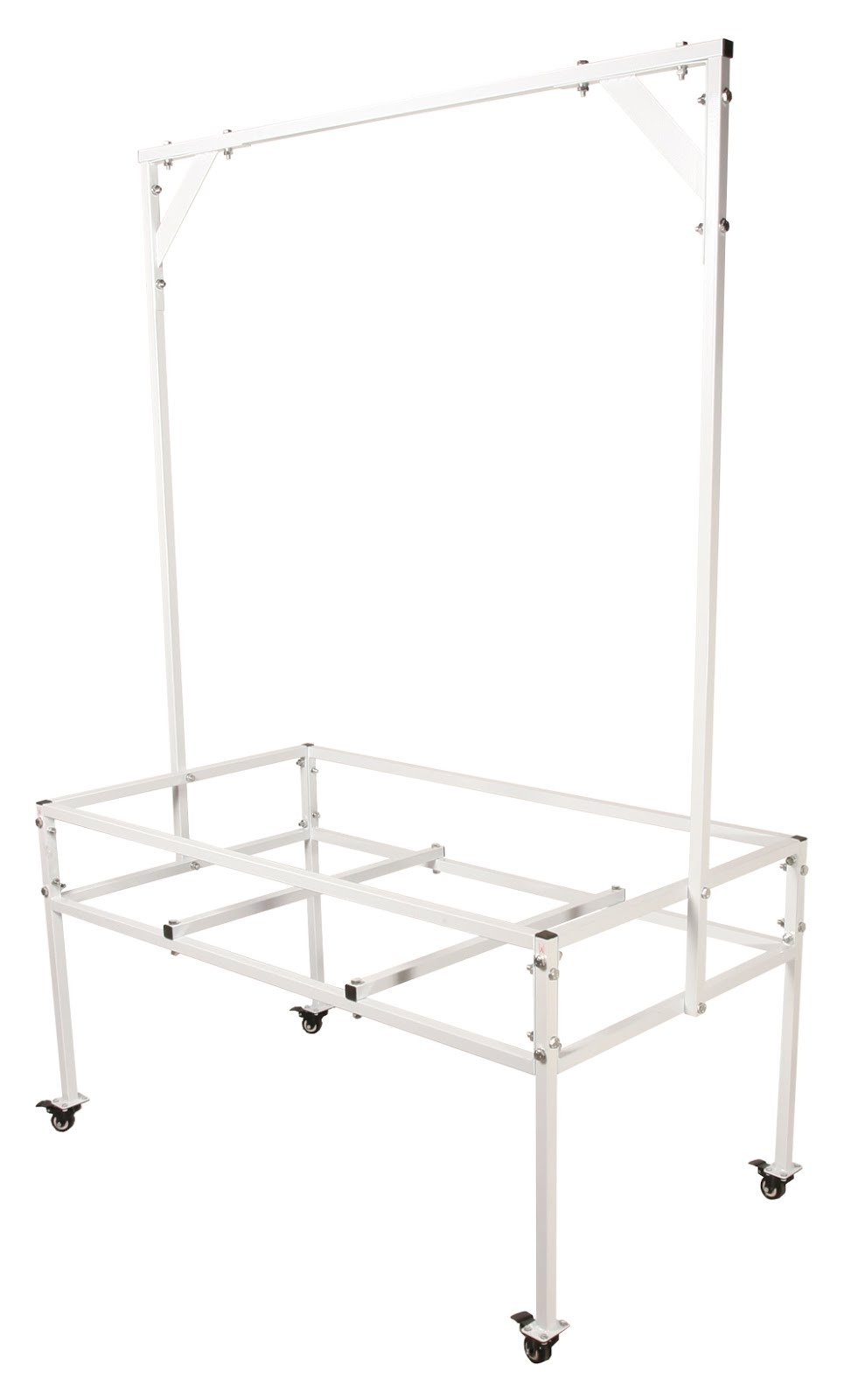
Lights need to be hung carefully on a sturdy frame.  We’ve built many frames for only a few dollars using parts from our local hardware store. A hood and bulb can weigh up to 50 lbs., and lighting stands should support that weight with the possibility of stress from all angles.

Never cut corners with construction. Lighting fixtures are a fire hazard if they are not properly secured and have adequate clearance. Learn how to make your own light stand.
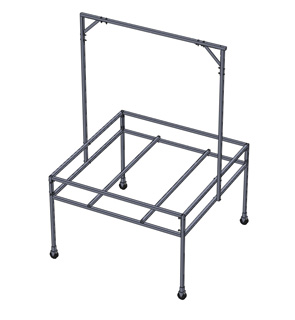
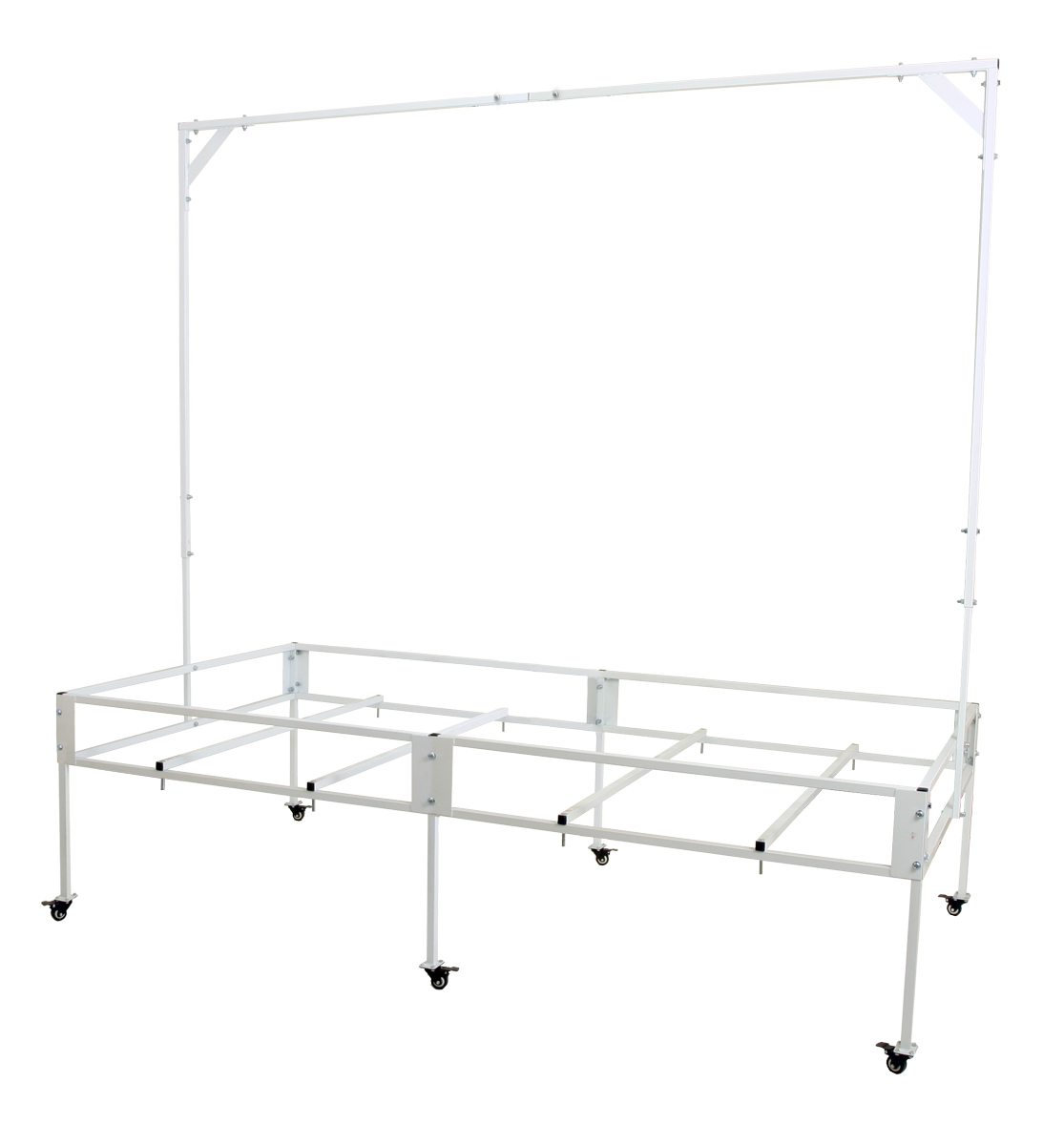
Stands designed specifically for hoods and trays are available on our site through special order only. These stands are steel, and expensive to ship which is why they are not included in our online inventory. Email us for a specific quote on stands.
Active Aqua Tray Stands (special order only): 2x4: $166.95; 65.0 lbs.
4x4: $261.95; 72.0 lbs.
8x4: $379.95; 90.0 lbs.


Wednesday, March 13, 2013

About Development

I’m proud to introduce hydroharbor.com. This felt like writing a novel in algebra, and I’m anticipating at least another 3 months of edits. It would be enormously validating if this website went on to become a huge success. However, even if I move on to do other things, it gives me a strong sense of accomplishment.

HydroHarbor.com is clean, efficient, requires little maintenance, and could run forever. There’s a sense of pride in listening to the hum of an engine that you have been working on for a long time. Sometimes you sell that car for less than you put into it, but that doesn’t remove the satisfaction of knowing it works.

HydroHarbor.com is an organic website, developed specifically for urban gardening retail. All open-sourced and original content. You can define your own standards for organic, but my focus has been to build a resource that is sustainable (opensource), with virtually no overhead, that can be expanded and maintained with even a little revenue. The content of the website is the local, real experience of gardeners here in Arizona. We welcome content from contributors and sponsor an affiliate program.

We don’t use any facebook plugins on our main website. This is because we take our privacy policy seriously, and even an unclicked facebook like button recovers the IP address of the vistor, the page URL, and the date to the millisecond. This is not important to most people, but a few people appreciate it. Our blog, however, is fully integrated with social plug-ins as well as our youtube channel.

The advantage hydroharbor.com has is that it carries no subscription to expensive licensed software because all of the code is original or opensource. The majority of online retailers pay monthly for software that manages their inventory and transactions for them. We manage the entire directory we use for the website, and can recover and launch the website and data anytime if we ever needed to.

This website could not have been possible without the help of my brother Nate, an expert on hydroponics, and the participation of local retailers.

I appreciate any feedback, especially critical feedback!

Friday, March 8, 2013

Educators and Community Organizers

HydroHarbor.com supports community education! We provide discounts for educators and community organizers to set up projects like gardens, greenhouses, classroom experiments and displays. Describe your project to us, and we’ll find solutions to match your budget. Let us worry about the details!

Our website hydroharbor.com aims to be a comprehensive educational resource for sustainable and urban agriculture. Hydroponics involves a scientific approach to gardening. We mix elemental nutrients specifically for different stages of plant development, measure pH and dissolved solids, and identify mineral deficiencies in growing plants.

Indoors, we use High Intensity Discharge bulbs that are chemically engineered to produce an ideal spectrum of light. These bulbs target plant photoreceptors that only absorb certain wavelengths. Different bulbs are used for different stages of the plant’s life cycle.


If you have a project in mind, we’ll help you plan from start to finish. We would love to work with you! Feel free to email me, or use our contact form.

Dan Porter
dan@hydroharbor.com


We've designed a few setups that will work great as classroom displays:


400W Start To Finish Deepwater Kit400W Complete Coco Setup

Thursday, February 28, 2013

Starting Seedlings


Chrysthanthemums have been reported by NASA to reduce indoor air pollution. Also, Dalmatian Chrysanthemums are an industrial source of insecticide, because they naturally contain active chemicals called Pyrethrins that inhibit the nervous system of insects. While I prefer not to use industrially refined insecticides, the chrysanthemum plant naturally repels insects, making it a perfect companion plant to your garden. We grew some chrysanthemums from seed to put in our garden and share with friends.

We used the following merchandise to sprout our chrysanthemums:

+10”x20” Cut Kit Tray
+72 cell Square Cut Kit Insert
+81 Jumpstart Pellets (peat moss) +2” Seedling Humidity Dome +3ml Pipette All of the parts we use are in our Seed Starter Kit
The end of a paintbrush is enough to open holes in the pellets before planting the seeds. For these chrysanthemums, it was ideal to plant the seeds just under the surface. Young seedlings will need light as soon as they spread their seed leaves, so it’s important to plant them based on the size of the seed and by what has been proven effective for each species.
We only used half the cells, so we checkerboarded them for even moisture, but there’s no reason not to fill the tray. Later, we’ll transfer the successful seedlings into their own 5-1/2 inch square planter pots To contrast the JumpStart peat pellets, we planted the chrysanthemum seeds in a tray filled with Coco (ground coconut husk fiber). Seedlings can be temperamental, so try a few different approaches to get a good feel of what will work best for you or your seed variety. Humidity domes help control moisture, but in some environments they may create an ideal climate for mold. Try less watering with a dome or more watering without a dome and see which works best for you. There are a number of ways to keep the trays hydrated. A pipette will give you control, but takes the most time. You can use a spray bottle to keep the plugs wet and water less frequently. Soaking the trays will give you the most time between waterings, but creates the risk of dampening off (which means to rot from being too wet). Plants won't need nutrients until they have begun photosynthesis, indicated by green leaves and then only use weak nutrients. Make sure plants have plenty of light as soon as they begin photosynthesis to avoid stretching.


We use a 24” T5 Fixture that holds four 24 watt High Output T5 bulbs, hung from a simple board stand.
After a few weeks, young plants can be strong enough to transplant into soil or larger hydroponic systems.

-Nato